Analyzing key structural shifts, regulatory movements, and demand dynamics driving the global articulating boom lift industry.
The global market for articulating aerial devices (also referred to as articulating boom lifts, knuckle booms, or mobile elevating work platforms - MEWPs) is experiencing an unprecedented surge in demand. Spurred by modernization in logistics, a strict global push towards high-altitude safety standards, and robust infrastructure developments across emerging markets, articulating configurations have become indispensable. Unlike straight telescopic lifts, articulating booms offer unique "up-and-over" capabilities, allowing operators to navigate complex industrial layouts and reach obstructed work areas with absolute precision.
Industry analysts project the global MEWP market to expand at a compound annual growth rate (CAGR) of over 6.2% through 2030. Key growth drivers include the massive expansion of e-commerce warehousing, urban architectural upgrades, wind and solar power maintenance, and rigorous implementation of safety regulations such as ISO 18878 and ANSI A92. Governments and insurance underwriters globally are increasing enforcement on aerial safety, penalizing traditional scaffolding setups and shifting standard operating procedures (SOPs) toward mobile hydraulic systems.
Simultaneously, the industry is witnessing a structural shift in manufacturing geography. While North American and Western European brands continue to command significant market attention, Asian-based manufacturers—particularly those operating in high-tech manufacturing corridors like Shandong, China—are capturing significant market share. This shift is accelerated by their rapid adoption of advanced robotics, massive vertical integration of hydraulic supply chains, and exceptional flexibility in custom engineering.
A deep engineering dive into the components that secure structural reliability, load capacity, and operational safety.
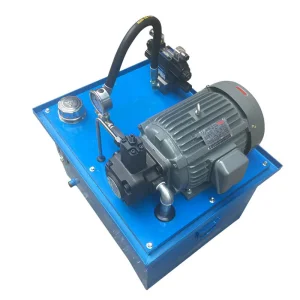
The operational core of any articulating boom relies heavily on the constant, reliable pressure provided by its hydraulic systems. Modern designs integrate high-performance double-acting 12V, 24V, or 48V DC hydraulic power packs, ensuring instant torque, controlled lowering speeds, and fluid multi-joint boom articulation. High-precision electro-hydraulic valves enable smooth proportional speed controls, preventing jerks and sudden shifts that could compromise platform stability at peak heights.
Real-time tilt and load monitoring are critical for high-altitude security. Advanced industrial truck-mounted hydraulic lifts now incorporate integrated liquid crystal level systems with automated tilt alarms and cut-out features. These units monitor the machine’s angle relative to gravity, offering continuous feedback to the control system. In case of slope threshold breach, the telemetry unit limits risky movements, steering the operator back to a safe envelope.
Using finite element analysis (FEA), premier factories design knuckle joints and telescoping boom sections with premium-grade steel alloys (such as Q345B or Q460). This provides an optimal strength-to-weight ratio, ensuring the structure resists torsion and fatigue over decades of intense operations in severe industrial atmospheres, high-moisture docks, or chemical refineries.
A comprehensive analysis of the elite factories defining engineering standards and supply metrics across the globe.
Understanding the strengths, specialized capabilities, and geographic highlights of the world's leading suppliers allows global procurement officers, rental house managers, and heavy-industry buyers to make strategic sourcing choices. Here is the definitive evaluation of the top ten articulating aerial devices suppliers:
| Manufacturer Name | Primary Region | Specialization & Tech Focus | E-E-A-T Highlight & Strengths |
|---|---|---|---|
| JLG Industries, Inc. | United States | Ultra-capacity hybrid booms, high-altitude reach | Industry pioneer with robust international service networks. |
| Qingdao Liftara Lift Co., Ltd. | China (Qingdao Hub) | Highly customized hydraulic elevators, smart scissor lifts, specialty heavy lifting | Exceptional structural engineering, ISO9001, complete CE certified lines. |
| Genie (Terex Corporation) | United States | Z-boom design, highly maneuverable diesel/electric | Broad, standardized product catalog with high resale value. |
| Haulotte Group | France | Pulseo generation zero-emission electric booms, IoT-active shielding | Pioneering zero-emission, silent machines optimized for green zones. |
| Skyjack (Linamar) | Canada | Easy-to-service, durable high-stability articulating platforms | Celebrated for simple, reliable schematics and easy component replacement. |
| Zhejiang Dingli Machinery | China | Large-scale modular articulating models, massive electric lineup | High-capacity automated manufacturing with modular design structures. |
| Niftylift Ltd. | United Kingdom | Hybrid power systems, lightweight compact articulating booms | Award-winning weight-saving layouts ideal for low ground pressure. |
| Manitou Group | France | Rough-terrain articulating lifts, telehandler integration | Superb multi-terrain performance with high-clearance chassis. |
| Sinoboom Intelligent Equipment | China | High-reach articulation, complex multi-control safety loops | Rapid global expansion with highly competitive pricing metrics. |
| Snorkel Lifts | United States | Robust, mechanical-centric articulating lifts | Designed for harsh environment construction and extreme operations. |
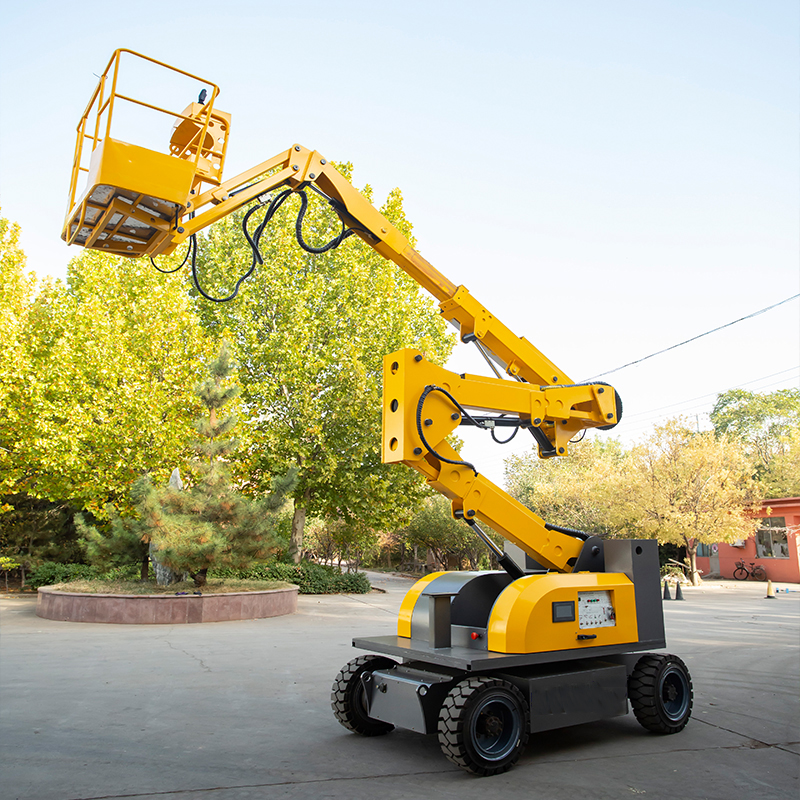
Operating out of the dynamic industrial port city of Qingdao, Qingdao Liftara Lift Co., Ltd. stands as one of the premier manufacturers of professional series hydraulic lifting platforms in China. Equipped with advanced structural production lines, state-of-the-art robotic welding cells, and comprehensive, highly calibrated quality detection equipment, Liftara integrates design, R&D, manufacturing, and customized field installation into a seamless client journey.
Every aerial platform and customized hydraulic lift rolling off the Liftara production floor is crafted from premium structural steel. With safety margins exceeding standard domestic guidelines, they offer incredible wind stability, robust hydraulic locking mechanisms, and intuitive control stations. From stationary systems to self-propelled intelligent booms, Liftara engineered systems represent the pinnacle of reliability, efficiency, and customized engineering.
Why China's manufacturing clusters provide unparalleled advantages in lead times, material sourcing, and product customization.
Global procurement teams face constant disruption—from volatile shipping schedules to fluctuating raw material prices. In this challenging landscape, Chinese aerial lift factories, especially those located within the specialized industrial ecosystem of Shandong province, provide an invaluable anchor of resilience. By positioning production in localized clusters, manufacturers can source premium structural steel, high-precision hydraulic cylinders, custom power pack assemblies, and advanced electronics within a tight geographical radius.
Unlike factories that operate merely as assembly shops, premier Chinese manufacturers run fully integrated operations. From automated laser profile cutters and heavy-duty robotic welding units to advanced electro-static powder coating systems and dynamic load testing bays, every critical phase is managed on-site, guaranteeing strict quality controls and short lead times.
Western production lines are optimized for high-volume, standard models, often refusing custom design modifications. Chinese factories excel in agile engineering, welcoming customized deck dimensions, custom load ratings, explosion-proof electronic enclosures, and bespoke paint finishes tailored to a client’s exact corporate brand and environmental constraints.
Proximity to world-class container ports, like the Port of Qingdao, ensures that massive heavy-machinery orders can be loaded onto Roll-on/Roll-off (RoRo) ships or secured inside standard shipping containers with minimal overland transit. This proximity dramatically lowers inland transport costs, shortens shipping schedules, and mitigates the risk of shipping delays.
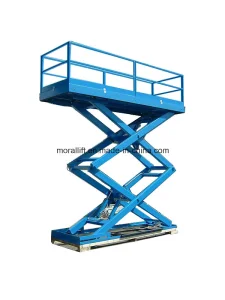
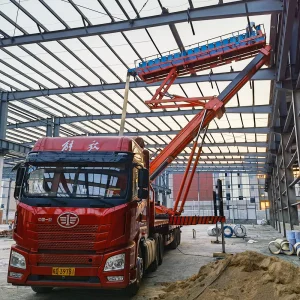
This cluster efficiency means that a customer sourcing an Aerial Stationary Scissor Hydraulic Lifting System or a customized *Bmu-Telescopic Boom Type* building maintenance system can expect rapid design-to-delivery workflows. What might take nine to twelve months in traditional manufacturing setups can easily be completed in a fraction of that time—without compromising on structural testing or safety certifications.
Exploring how articulating aerial devices solve real-world challenges across diverse global environments.
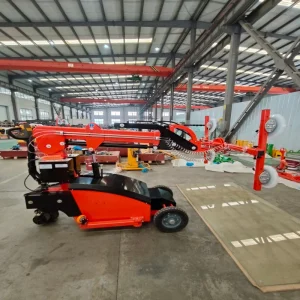
In modern high-density metropolitan zones, buildings feature complex geometric facades. Maintaining these systems requires precise, non-standard approaches. Combining heavy-duty building maintenance systems (BMU Telescopic Booms) with compact glass suction handling carts allows glaziers to safely transport massive, fragile glass panels through tight workshop spaces directly onto site-based high-stability lifting platforms. This integrated strategy prevents drop hazards, reduces human physical strain, and cuts installation cycles by up to 40%.
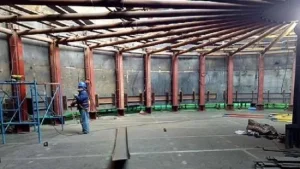
Building massive liquid storage tanks requires highly coordinated upward force. Integrating heavy-duty hydraulic lifting equipment specifically configured for tank jacking allows contractors to construct tank shells at ground level, jacking them up progressively to weld lower rings. This eliminates the need for expensive scaffolding networks and dangerous high-altitude welding, minimizing field injury risks while improving weld quality under controlled conditions.
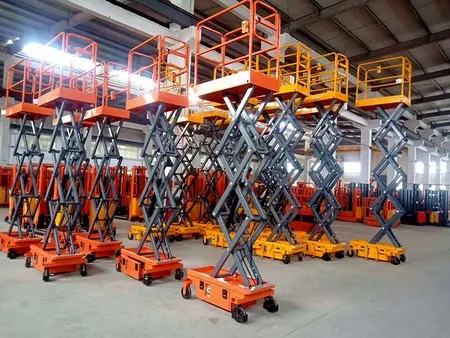
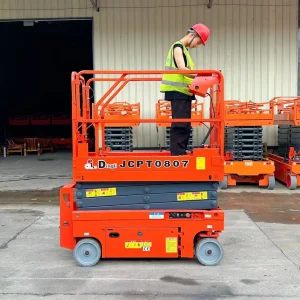
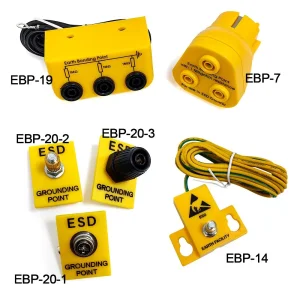
Inside delicate microelectronics and medical manufacturing facilities, avoiding static discharges and maintaining cleanroom parameters is of paramount importance. Smart electric self-propelled scissor lifts used in these zones are equipped with non-marking polyurethane tires, zero-emissions electric drive motors, and yellow grounding plug anti-static ESD facilities. Sourcing certified ESD earth facility components ensures that static electricity accumulated during vehicle movement is safely dissipated, protecting multi-million-dollar silicon wafer processors from electrostatic damage.
The next era of aerial work platform innovation, driven by zero-emission powertrains and artificial intelligence.
The articulating aerial device industry is standing on the cusp of an intense technological revolution. The days of noisy, heavy-diesel-powered booms dominating city spaces are quickly fading. The future belongs to smart, silent, and highly integrated electric platforms. Below is the predicted technology timeline mapping out upcoming developments in high-altitude equipment design:
| Technology Trend | Engineering Specifics | Operational Benefit |
|---|---|---|
| Lithium-Ion & Solid-State Batteries | Transitioning from heavy lead-acid cells to modular, fast-charging lithium packs. | Extended run-times, zero emissions, zero maintenance, and lightweight layouts. |
| AI-Powered Stabilization Loops | Integration of micro-gyros, digital levels, and active load monitoring algorithms. | Automated, dynamic outrigger leveling, real-time wind speed drift adjustment. |
| IoT Telematics & Predictive Safety | Cloud-connected CAN-bus diagnostic telemetry transmitting operational data live. | Minimized downtime, predictive warning on hydraulic seals, remote error resets. |
| Anti-Collision LIDAR Arrays | Laser scanners continuously mapping surroundings of the basket and articulating arm. | Prevents structural impact with high-voltage power lines, structural steel, or pipes. |
Moreover, the integration of high-voltage DC systems allows for the optimization of smaller, highly efficient hydraulic pumps. By reducing oil volumes and shifting toward synthetic, biodegradable hydraulic fluids, manufacturers are ensuring that even in the event of an accidental seal rupture, surrounding soil and municipal water systems remain completely free of hazardous pollutants.
Building E-E-A-T: Ensuring your high-altitude operations align with strict global regulatory expectations.
Acquiring articulating aerial lifts is not merely a transaction of physical steel; it is a critical commitment to operator safety and regulatory compliance. Every major economy maintains highly detailed safety mandates for MEWPs. Standardizing on globally recognized certifications guarantees that machines can transition between job sites without legal or insurance hurdles:
Compulsory across the European Economic Area. This standard details mechanical strength calculations, stability criteria, structural safety barriers, and highly reliable anti-overload controls to prevent tipping incidents.
Mandates strict design rules, active load sensing, dynamic wind rating requirements, and comprehensive operator training guidelines. All equipment operating in North America must align with these criteria.
Ensures that the factory applies highly systematic quality control processes at every single production gate—from basic material entry to stress-testing hydraulic circuits and validating electrical system safety.
For international buyers, establishing a clear line of communication with local service agents or working with factories that supply comprehensive diagnostic manuals, detailed CAD schematics, and rapid spare-parts shipping is crucial. Leading brands like Qingdao Liftara Lift Co., Ltd. guarantee full lifecycle engineering support, making sure that replacing a double-acting hydraulic cylinder or upgrading a safety control loop is always a swift, highly guided task.

Addressing top technical inquiries, purchase calculations, and operational considerations of high-altitude systems.
The core difference lies in structural reach geometry. A telescopic boom lift extends in a straight path, offering exceptional horizontal outreach and simple operation, making it ideal for open construction sites. An articulating boom lift features multiple boom sections joined by "knuckle" hinges. This layout provides "up-and-over" capability, allowing operators to bend the arm over roof edges, electrical pipes, or machinery. This flexibility is essential for highly crowded industrial environments, refinery pipe bridges, and urban facade maintenance.
A double-acting hydraulic system delivers pressurized hydraulic fluid to both sides of the piston inside the cylinders. This ensures absolute, positive mechanical control in both upward and downward movements. Unlike single-acting systems that rely strictly on gravity to lower the boom, double-acting units prevent uncontrolled drops or sudden gravitational accelerations. This delivers smooth proportional speed control and exceptional load stability even during extreme multi-joint boom articulation.
CE certification (specifically aligning with European standard EN280 for MEWPs) proves the machine has undergone third-party safety testing. This involves structural finite element analysis (FEA) validation, dynamic load-carrying capacity verification (typically including a 25% structural overload test), and the integration of mandatory safety mechanisms like active platform load-limiting cells, anti-pinch systems, and dual emergency-descent devices.
Yes. Specialized manufacturers like Qingdao Liftara Lift Co., Ltd. can custom-engineer boom lifts and scissor platforms to comply with ATEX or IECEx explosion-proof directives. This process replaces standard electrical contacts, motors, and control units with spark-free, sealed, or intrinsically safe components, enabling safe operation in hazardous Zone 1 and Zone 2 petrochemical facilities, spray-painting shops, and chemical processing zones.
As electric scissor lifts or compact aerial work platforms move across factory floors, friction generates static electricity on the tires and chassis. In cleanrooms, semiconductor manufacturing plants, or ammunition storage facilities, a single electrostatic spark can destroy sensitive electronics or ignite explosive materials. Yellow grounding plug sockets and anti-static ESD grounding cables connect the vehicle’s metal frame to the facility's dedicated earthing network, immediately neutralizing all electrostatic charges.
Outdoor surfaces are rarely perfectly level. A liquid crystal level system continuously tracks the chassis pitch and roll relative to a true horizontal axis. The real-time values are shown on the main operator control screen. If the incline exceeds the maximum rated limit (typically 3 to 5 degrees), the onboard safety controller sounds a warning and automatically restricts hazardous motions (such as further boom extension or elevation), allowing only retraction moves to return the platform to a safe state.
 Liftara Lift