Construction lifting operations influence the entire rhythm of a project. A delayed crane can leave crews waiting, materials exposed, and equipment standing idle. Small planning gaps become expensive site-wide problems.
The practical question is not only how to lift faster. It is how to increase efficiency in construction lifting operations without weakening safety, control, or worker confidence. Dr. David Macdonald, an engineer and author specialising in lifting equipment, states, “A lifting operation must be properly planned, appropriately supervised, and carried out safely.” His principle links productivity with disciplined preparation. It does not treat safety as a separate administrative task.
Efficient lifting begins before the crane arrives. Teams should confirm load weights, lifting points, ground conditions, exclusion zones, and communication signals. A clear lift plan can prevent a mobile crane from waiting beside an unfinished access route. Digital scheduling may also reduce clashes between deliveries, cranes, and other trades. Yet technology alone cannot solve poor decisions. People still need current information.
The best sites review each lift after completion. Was the load balanced? Did weather change the sequence? Did workers spend ten minutes searching for rigging gear? These details reveal practical waste. Some assumptions will fail. That is useful, if teams record the failure and improve the next lift. Efficiency is not reckless speed. It is steady movement, fewer interruptions, and safer decisions repeated across the project.
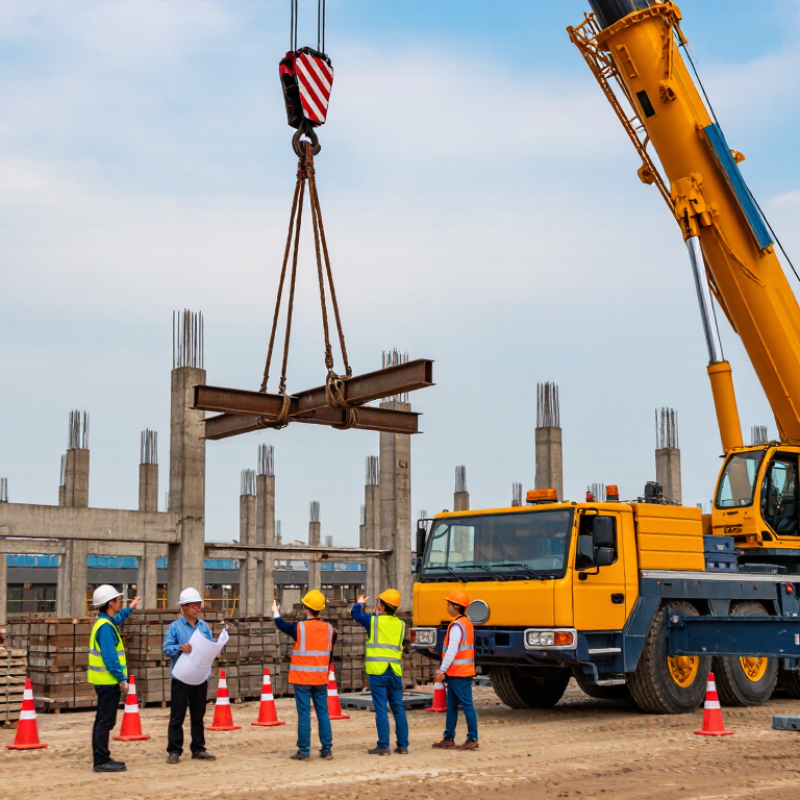
Construction lifting operations cover more than moving materials from ground level to a higher floor. They include load assessment, route planning, equipment selection, communication, and final placement. Each step affects safety, cost, and schedule. A steel beam may travel only 30 meters, yet poor coordination can create hours of delay. Efficient lifting means controlled movement, not simply faster movement. Site experience shows that rushed lifts often hide planning failures.
Tips: Keep the lifting zone clear and visibly marked. Use one appointed signaler. Confirm the load weight before rigging. Stop when conditions change. Small checks prevent expensive mistakes. A short toolbox briefing can reveal missing information, although teams sometimes treat it as routine paperwork. That habit deserves honest review.
Why Increase Efficiency in Construction Lifting Operations?
Key Efficiency Gains from Optimized Lifting Procedures
Efficient lifting begins with accurate planning, not faster crane movement. Site teams can review load weights, lifting paths, weather conditions, and ground stability before work starts. This reduces waiting time between deliveries and keeps operators focused on controlled movements. Clear communication also matters. A short, confirmed signal can prevent costly hesitation or dangerous confusion.
Small improvements create measurable gains. Positioning materials near the lifting zone reduces unnecessary travel across the site. Checking slings, hooks, and connection points before each shift helps prevent equipment-related delays. Experienced supervisors often record lift durations, idle periods, and near misses. These details reveal where procedures waste time. Paper records can be imperfect, but they still support better decisions.
Not every optimized procedure feels efficient at first. Extra inspections may slow the first lift, especially on crowded sites. However, they can prevent longer stoppages caused by damaged equipment or unstable loads. I have seen teams focus too heavily on speed and overlook changing wind conditions. That mistake is easy to repeat. Regular training, practical drills, and independent safety checks create more reliable performance. Workers should also have authority to pause a lift when conditions change, without pressure to continue.
Key efficiency gains come from reducing avoidable waiting, improving lift planning, and standardizing communication. The chart below uses a calculated one-hour operating model: productive lifts per hour equals 60 divided by the average lift-cycle time.
Reducing the average cycle from 12 minutes to 8 minutes increases modeled output from 5 to 7.5 lifts per hour, a 50% improvement. This is a planning model rather than a universal industry benchmark; actual results depend on load characteristics, site layout, crew coordination, equipment capacity, weather, and safety controls.
A lifting operation rarely fails because the crane lacks power. It often loses time through unclear drawings, late deliveries, or missing access routes. Careful planning connects the lift supervisor, engineer, operators, and site crews before equipment arrives. The team can confirm load weight, center of gravity, lifting radius, ground capacity, and exclusion zones. This turns several minutes of uncertainty into a controlled sequence.
Industry data shows why coordination matters. McKinsey reported that construction productivity grew by about 1% annually over two decades, far below manufacturing’s 3.6% rate. The FMI and PlanGrid report estimated that poor project data and miscommunication contributed to $177.5 billion in rework in 2020. These figures do not measure lifting alone. They reveal a wider problem: fragmented decisions quietly consume productive hours.
Tips: Hold a short lift briefing beside the work area. Mark the crane path and landing zone physically. Use one approved lift plan, not several conflicting copies. Confirm radio signals and hand signals before the first pick. Record delays honestly; “minor” interruptions often repeat. Digital coordination helps, but it cannot replace an experienced person checking the actual ground. I have seen well-designed plans fail after rain softened the access road. That uncomfortable detail matters. Weather, visibility, and worker fatigue deserve the same attention as load charts. Loose planning creates waiting time. Clear coordination creates momentum.
Construction lifting is changing from a manual coordination task into a data-driven safety process. Digital lift plans can show load weight, travel paths, exclusion zones, and ground conditions before equipment moves. Load sensors then compare real-time pressure with planned limits. Cameras and proximity alerts can warn operators when a worker enters a blind area.
The need is measurable. The U.S. Bureau of Labor Statistics recorded 1,075 fatal work injuries in construction in 2023. Many incidents involve struck-by hazards, falls, or equipment movement. Technology cannot remove every risk, but it can reduce uncertainty around each lift. The FMI and PlanGrid Construction Disconnected report estimated that poor data and communication contributed to nearly half of construction rework causes. Better digital records can prevent wrong deliveries, repeated handling, and rushed adjustments.
Speed matters too. Telematics can identify idle equipment, delayed deliveries, and repeated crane movements. A supervisor may notice a safer sequence before the crew begins. Small improvements accumulate. Yet technology is not a magic shield. A poorly calibrated sensor can create false confidence, while an unread dashboard adds little protection. Operators still need practical training, clear signals, and permission to stop an unsafe lift. The best systems support experienced judgment instead of pretending to replace it.
In construction lifting, efficiency means more than moving loads quickly. It means completing planned lifts safely, consistently, and with limited wasted time. Measure each cycle from signal to set-down, then record waiting, repositioning, and equipment idle time. A simple site sheet can capture load weight, lift duration, crew size, weather, and interruptions. That evidence is more useful than assumptions. Our early estimates were often too optimistic.
Compare actual cycle times with the lifting plan and scheduled production rate. Track utilization, but do not treat constant motion as success. A crane operating near its limit may increase risk and reduce control. Review hook travel distance, setup time, communication delays, and rejected lifts. Short toolbox discussions often reveal practical causes, such as poor staging or unclear hand signals. Record near misses and minor stoppages without blaming individuals. Honest reporting improves reliability.
Maintaining efficiency requires regular inspection, planned maintenance, and competent supervision. Check slings, shackles, hooks, brakes, controls, and ground conditions before work begins. Remove damaged gear from service and document the decision. Use weekly trend reviews to adjust crew positions, delivery timing, and lift sequencing. Weather changes may require slower operations or a revised plan. Keep it visible. A dashboard can help, but numbers can mislead when data is incomplete. We still need to question unusual results and compare them with field observations.
It includes load assessment, route planning, equipment selection, communication, lifting, placement, and securing. It is controlled movement. Speed alone is not efficiency.
Match cranes, hoists, slings, shackles, and spreader beams to the load, height, reach, and ground conditions. Check load charts and inspection records. Never guess the load weight.
Inspect lifting points, hooks, brakes, controls, slings, shackles, and ground conditions. Review the weather and travel route. Remove damaged gear from service.
Appoint one signaler and use a clear, agreed signal system. Keep the lifting zone marked and free of unnecessary workers. Confusion causes delay.
Digital lift plans can display load weights, travel paths, exclusion zones, and ground conditions. Sensors may compare real-time pressure with planned limits. Technology supports judgment. It does not replace training.
Record each cycle from the first signal to final set-down. Track waiting, repositioning, idle equipment, weather, and interruptions. A simple site sheet may be enough.
Long waiting periods, repeated crane movements, unclear hand signals, poor staging, and rejected lifts are warning signs. Near misses also matter. Small stoppages reveal weak planning.
Stop the lift and review the plan when wind, ground stability, visibility, or load conditions change. A slower operation may be safer and more efficient. Our early estimates can be too optimistic.
Schedule regular inspections, planned maintenance, competent supervision, and weekly trend reviews. Adjust crew positions, delivery timing, and lift sequencing when evidence supports change. Question unusual data. A dashboard cannot see everything.
Construction lifting operations involve the planned movement, positioning, and securing of materials, components, and equipment on a job site. They depend on suitable lifting machinery, qualified operators, clear procedures, and effective communication. Understanding how to increase efficiency in construction lifting operations begins with selecting the right equipment, preparing load paths, checking site conditions, and coordinating lifting schedules with other construction activities. These measures can reduce waiting time, prevent unnecessary movement, improve workflow, and support safer material handling.
Technology can further improve productivity through digital planning, load monitoring, communication systems, and real-time progress tracking. However, efficiency should always be measured alongside safety and quality. Useful indicators include lifting cycle time, equipment utilization, delays, handling errors, and completed lifts per shift. Regular inspections, performance reviews, operator training, and continuous process adjustments help maintain consistent results. By combining careful planning, coordinated teamwork, appropriate equipment, and reliable measurement, construction projects can complete lifting tasks more quickly, safely, and cost-effectively.

Liftara Lift