Aerial work platforms (AWPs) are essential tools in various sectors. They enhance safety and efficiency when performing tasks at heights. Understanding what industries use aerial work platforms the most reveals their significance.
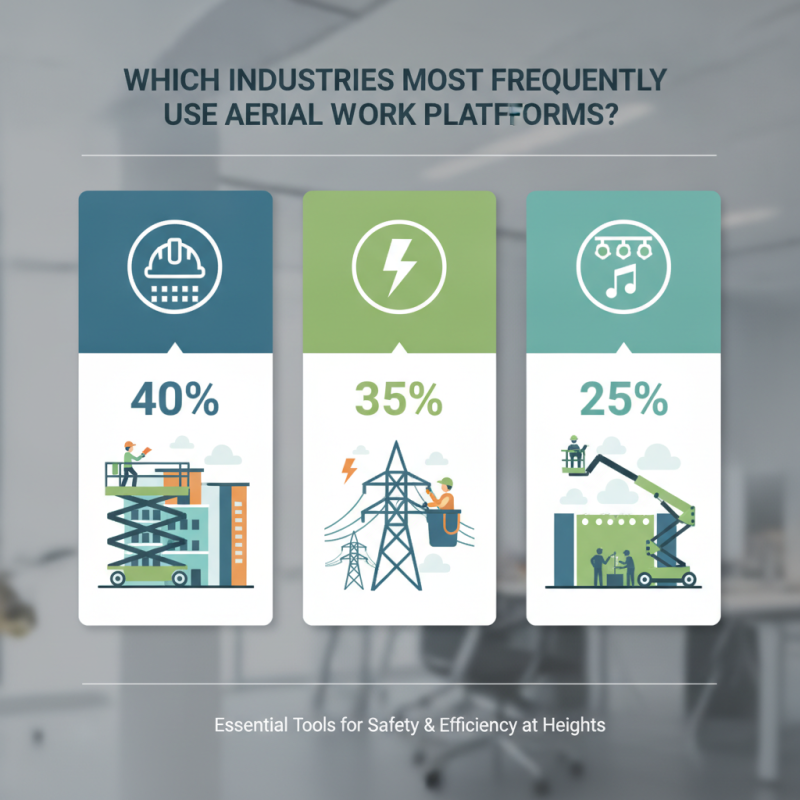
Construction is one of the primary users of AWPs. These platforms enable workers to reach high places safely while performing tasks like installing drywall or working on roofs. However, improper training can lead to accidents. Maintenance of AWPs is crucial for ensuring worker safety.
The utility sector also relies heavily on AWPs. Technicians use them to access power lines and maintain infrastructure. This industry demands strict adherence to safety protocols to prevent mishaps. While AWPs provide convenience, they require skilled operators to maximize their benefits.
Lastly, the entertainment industry uses aerial work platforms for concerts and productions. They help with lighting setups and stage construction. Yet, this sector often overlooks necessary inspections, posing potential risks. Recognizing the key industries that utilize AWPs helps in understanding their value and the need for responsible usage.
Aerial work platforms (AWPs) play a crucial role in various industries.
Construction is one of the leading sectors that utilizes these platforms.
Workers rely on AWPs for tasks like installing beams and conducting roof repairs.
The height and mobility of these platforms enhance safety and efficiency.
Another industry that frequently employs AWPs is maintenance.
This can include electrical repairs and building façade cleaning.
Technicians often need to access high areas safely.
The use of these platforms reduces the risk of accidents.
However, improper training in using AWPs can lead to hazards.
Manufacturing is also a key sector using these platforms.
In warehouses, AWPs assist in inventory management.
Operatives can reach high shelves quickly.
Nevertheless, companies must ensure ongoing training for their workforce to mitigate risk.
Regular maintenance of the equipment is equally essential for safe operations.
This ensures that the tools remain reliable and effective in varied work environments.
The construction sector relies heavily on aerial work platforms (AWPs) for various applications. These platforms enhance safety and efficiency at job sites. They allow workers to access high areas without ladders or scaffolding. Common tasks include installing lighting fixtures, repairing roofs, and conducting maintenance work.
AWPs come in several types, including scissor lifts and boom lifts. Scissor lifts provide a stable platform for tasks needing vertical reach. Boom lifts are ideal for over obstacles, offering flexibility in positioning. However, selecting the right AWP for a specific task is crucial. Misjudgment can result in safety hazards or project delays.
Tips for using aerial work platforms safely include training operators thoroughly on equipment use. Always conduct a pre-use inspection to identify any issues. Ensure the area is free of obstacles before maneuvering. Regular maintenance checks are necessary to keep the equipment in optimal condition. This attention to detail is what helps prevent accidents and improves work efficiency. Making informed choices will lead to successful outcomes in construction projects.
Aerial work platforms (AWPs) are essential in maintenance and repair services across various industries. These platforms enhance worker safety and efficiency when performing tasks at height. According to a 2022 market report, the global AWP market is projected to grow significantly, driven largely by increasing demand in maintenance-related sectors.
In the construction industry, AWPs provide valuable support for tasks like electrical work and facade repairs. They allow workers to access hard-to-reach areas safely. The growing focus on infrastructure maintenance is expected to lead to more investments in AWPs, especially in urban areas. The need for regular upkeep and repairs creates a steady demand for aerial work solutions.
Tips: Always inspect the AWP before use. Look for any signs of wear or damage. Ensuring the platform is in good condition is crucial for safety. Additionally, proper training on AWP operation can prevent accidents and promote efficient workflow.
The maintenance service industry is seeing an increased adoption of AWPs. Despite their advantages, not all maintenance tasks require AWPs. Sometimes, traditional ladders or scaffolding may suffice. Evaluating the specific task at hand can lead to better resource allocation. It’s essential for businesses to periodically review their equipment choices, keeping in mind the evolving needs of maintenance operations.
This chart illustrates the percentage of aerial work platform usage across various industries, highlighting the sectors that rely on these platforms for maintenance and repair services.
The telecommunications and broadcasting industry heavily relies on aerial work platforms. These platforms allow technicians to access high towers and antennas safely. Regular maintenance and installation tasks often require reaching significant heights. Aerial work platforms provide stability and height adjustment, ensuring that workers can perform tasks effectively while reducing the risk of accidents.
In this industry, precision is crucial. Technicians install sensitive equipment that affects signal quality. The platforms help maintain a clear line of sight, which is essential for optimal broadcast performance. However, not all platforms are the same. Some may lack the versatility needed for varied site conditions. Working on uneven terrain can be a challenge.
Safety remains paramount. Inexperienced technicians might underestimate risks. Proper training and adherence to safety protocols are essential. The consequence of negligence can be severe. Understanding the equipment and knowing when to use it is critical. Continuous improvement and reflection on practices can enhance overall safety and efficiency.
The film and entertainment sector has a unique reliance on aerial work platforms. These machines are essential for raising crews to heights. Filming requires precise angles and lighting. Aerial work platforms provide the height needed for aerial shots and stunts. They enable filmmakers to capture breathtaking visuals. They facilitate creativity and expand possibilities in production design.
Moreover, the use of aerial platforms is not without challenges. Safety is paramount when operating at high altitudes. Proper training and protocols are necessary. Sometimes, operators may overlook safety checks in the rush of production. This oversight can lead to accidents, impacting not just the crew but the project's timeline.
However, the versatility of aerial work platforms makes them invaluable. They are often used in scenic setups and location changes. The platforms can adapt to various environments, which is a big plus. While they bring many advantages, continuous reflection on safe practices is crucial. The balance between creativity and safety must be maintained for successful film production.
WPs)?
They provide height and mobility, allowing workers to perform tasks like installing beams safely.
Improper training can lead to accidents and hazards when using AWPs.
They help operatives manage inventory by allowing quick access to high shelves.
Some platforms may lack the versatility needed for safe operations on uneven ground.
They enable technicians to safely install and maintain equipment on high towers.
Regular maintenance ensures equipment remains reliable and safe for varied work environments.
They must understand equipment limitations and adhere to safety protocols to avoid accidents.
Continuous reflection on methods and training can enhance overall efficiency and safety.
Negligence can lead to serious accidents and reduced operational effectiveness.
Aerial work platforms (AWPs) are essential tools across various sectors, primarily due to their ability to provide safe and efficient access to elevated work areas. What industries use aerial work platforms the most? The construction sector leads in their usage, utilizing AWPs for tasks such as building maintenance, installation, and repairs. Additionally, maintenance and repair services frequently rely on these platforms to perform overhead work safely and effectively.
Moreover, the telecommunications and broadcasting industries leverage aerial work platforms for installing and repairing antennas, as well as for maintenance tasks on communication towers. The film and entertainment sector also depends on these platforms for set construction and aerial filming, demonstrating the versatility and critical role of AWPs in diverse applications. Overall, the high demand in these industries underscores the importance of aerial work platforms in enhancing productivity and safety.

Liftara Lift