Training workers on safe lifting equipment use is crucial. A well-structured program not only enhances safety but also boosts productivity. Many organizations overlook the importance of proper training, leading to injuries and costly downtime. Employers must consider effective techniques when determining how to train workers for safe lifting equipment use.
Workers need hands-on experience with lifting equipment. Practical training sessions can significantly improve their understanding of safe operating procedures. Theory alone is not enough. Trainees should engage with real equipment under supervision. This approach ensures they grasp potential hazards and safety protocols.
Some organizations might rush the training process, resulting in incomplete understanding. It's vital to assess workers’ grasp of safe practices regularly. Continuous feedback helps refine training techniques. Enhancing training programs is an ongoing effort, addressing gaps in safety knowledge, and ensuring workers feel confident in using lifting equipment safely.
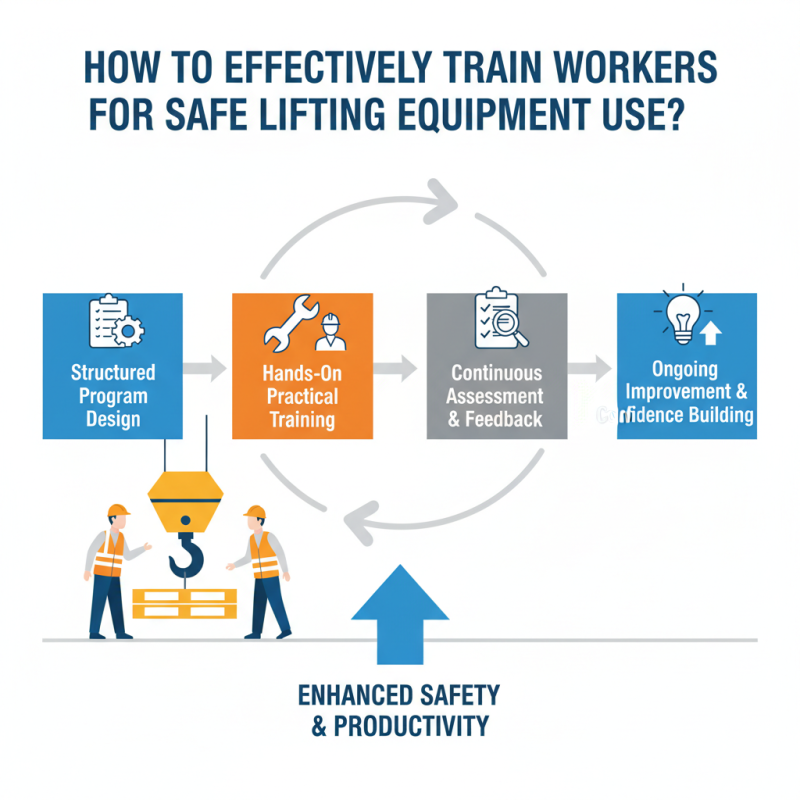
Understanding the importance of safe lifting equipment training is crucial for any workplace. Proper training significantly reduces the risk of injuries. Workers must learn how to operate lifting equipment correctly. Inadequate training can lead to accidents, causing physical harm and financial loss. A strong understanding can empower workers to take responsibility for their safety and that of their colleagues.
Effective training involves practical demonstrations and hands-on experience. Workers should practice using different types of lifting equipment. Training sessions should include realistic scenarios that workers might encounter. This way, they can better understand potential hazards. Additionally, it’s important to encourage workers to ask questions. Overlooking doubts can lead to dangerous situations. Regular refresher courses can reinforce this knowledge. Training should never be a one-time event.
Mistakes will happen, and it’s vital to acknowledge them. Reflecting on past incidents helps develop a more robust training program. Organizations must adapt their training according to lessons learned. This creates a more safety-conscious environment. Everyone plays a role in maintaining safety standards. Emphasizing this shared responsibility builds a stronger safety culture.
| Training Module | Duration (Hours) | Target Audience | Key Learning Outcomes | Assessment Method |
|---|---|---|---|---|
| Introduction to Safe Lifting Equipment | 2 | All employees | Understand lifting hazards and equipment | Quiz |
| Proper Technique for Lifting | 3 | Warehouse staff | Learn correct body mechanics to avoid injury | Practical demonstration |
| Use of Lifting Devices | 4 | Operators | Familiarity with equipment and safety checks | Hands-on test |
| Emergency Procedures | 1.5 | All employees | Respond effectively to incidents | Scenario testing |
| Regular Safety Refreshers | 2 | All employees | Ensure continual awareness and practice | Feedback survey |
: It reduces the risk of injuries and financial loss in the workplace. Proper training empowers workers to ensure their safety.
Workers need hands-on experience and practical demonstrations focusing on realistic scenarios. This deepens their understanding of potential hazards.
Training should be continuous, not just a one-time event. Regular refresher courses keep knowledge fresh and relevant.
They must understand load distribution and stability. This knowledge helps avoid accidents and maintain safety standards.
Feedback fosters a safety culture and helps identify training needs. Openness can lead to improved practices and safer working conditions.
Inadequate training can result in significant risks, including accidents and injuries. Learning from mistakes is crucial for safety improvement.
Continuous training reduces lifting-related injuries. Companies with regular training see a noticeable drop in incidents.
Regular certification ensures workers are updated on safe practices and changes in equipment or regulations. Complacency can lead to accidents.
Role-playing highlights common mistakes and engages workers. This practical approach improves understanding of safe lifting techniques.
Effectively training workers for safe lifting equipment use is crucial to prevent workplace injuries and enhance productivity. The training process begins with understanding the significance of proper instruction, which lays the foundation for a safe working environment. It's essential to identify different types of lifting equipment and their specific training requirements to ensure workers are well-prepared for various scenarios.
Developing a comprehensive training program involves not only theoretical components but also hands-on training that allows workers to practice their skills in a controlled setting. Implementing assessment techniques during training helps gauge understanding and proficiency. Lastly, to maintain safety standards over time, ongoing training and certification should be a priority, ensuring that workers remain competent in using lifting equipment safely and effectively. By addressing these elements, organizations can ensure they know how to train workers for safe lifting equipment use, fostering a safer workplace culture.

 Liftara Lift