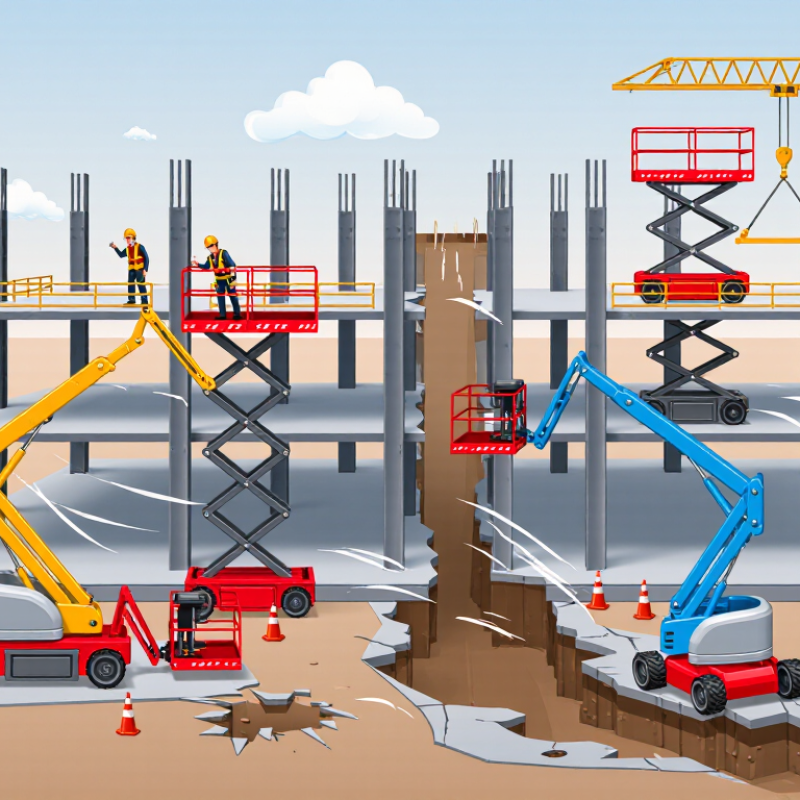
| Ground Conditions and Stability |
Tip-over risk when equipment is positioned on soft, sloped, uneven, or insufficiently supported ground. |
Incomplete site assessment, hidden voids, wet soil, inadequate outrigger support, or operation beyond the permitted slope. |
Serious injury, equipment damage, structural failure, or work stoppage. |
Complete a documented ground assessment; use level indicators, approved support pads, wheel chocks, and the manufacturer’s slope limits. |
100% of pre-use inspections include ground and slope verification. |
| Overloading and Load Distribution |
The platform is operated above its rated capacity or loads are concentrated on one side. |
Unrecorded tools and materials, multiple occupants, poor load planning, or misunderstanding of dynamic capacity limits. |
Reduced stability, control-system activation, component damage, or falls from height. |
Display the rated capacity clearly, weigh or estimate loads conservatively, secure materials, and never bypass overload protection. |
Zero operating cycles with a recorded overload alarm or capacity violation. |
| Falls from the Platform |
A worker falls while entering, exiting, leaning over guardrails, or working with an unprotected opening. |
Missing gates, damaged guardrails, improper harness use, climbing on rails, or unsuitable access practices. |
Major or fatal injuries and regulatory non-compliance. |
Keep gates closed, inspect guardrails, use approved personal fall protection where required, and prohibit climbing on rails or baskets. |
100% compliance with access, gate, and fall-protection checks. |
| Overhead and Electrical Hazards |
The boom, platform, or load contacts overhead lines, structures, lighting, or pipework. |
Poor route planning, limited visibility, inadequate clearance assessment, or unauthorized work near energized conductors. |
Electric shock, arc flash, fire, equipment damage, or collision. |
Identify overhead hazards before setup, maintain the legally required clearance, use a spotter, and isolate or protect electrical services when feasible. |
100% of work zones have a documented overhead-hazard review. |
| Collision and Pedestrian Interaction |
The machine strikes people, vehicles, buildings, racking, or other equipment during travel or positioning. |
Blind spots, congested sites, inadequate exclusion zones, poor communication, or excessive travel speed. |
Crushing injuries, property damage, downtime, and delays. |
Establish barriers, use a trained spotter where visibility is limited, apply site traffic rules, and test alarms and cameras. |
Zero unauthorized persons inside the defined operating exclusion zone. |
| Weather and Wind Conditions |
Wind, rain, ice, lightning, or poor visibility affects stability, traction, and operator control. |
Failure to monitor forecasts, work above the permitted wind limit, slippery surfaces, or sudden weather changes. |
Loss of stability, falls, reduced visibility, or weather-related shutdowns. |
Check weather before and during work, follow the equipment’s wind rating, stop during lightning, and secure the machine when parked. |
100% of shifts include a recorded weather and wind assessment. |
| Inspection and Preventive Maintenance |
Mechanical, hydraulic, electrical, or structural defects remain undetected or are not repaired promptly. |
Skipped daily inspections, incomplete maintenance records, delayed parts, contamination, or unauthorized repairs. |
Unexpected breakdowns, unsafe operation, repair costs, and lost productivity. |
Use pre-start checklists, follow scheduled maintenance intervals, tag defective equipment out of service, and retain service records. |
100% completion of scheduled inspections and corrective-action closure before release. |
| Operator Competence and Communication |
Operators misunderstand controls, operating limits, emergency procedures, or site-specific hazards. |
Insufficient training, language barriers, unfamiliar equipment, fatigue, or lack of practical assessment. |
Unsafe maneuvers, delayed emergency response, incidents, and reduced productivity. |
Authorize trained operators only, provide equipment-specific familiarization, conduct toolbox talks, and verify two-way communication. |
100% of operators have current training and documented equipment familiarization. |
| Emergency Rescue and Recovery |
A person becomes stranded at height or the machine loses power and cannot be lowered normally. |
No rescue plan, inaccessible ground controls, untested emergency lowering system, or poor communication. |
Delayed rescue, suspension trauma, panic, or secondary injuries. |
Prepare a site-specific rescue plan, identify trained rescuers, test emergency controls, and keep contact methods available. |
A documented rescue drill is completed before high-risk work begins. |
| Battery, Fuel, and Charging Safety |
Charging, refueling, or battery handling creates fire, spill, gas, or equipment-availability risks. |
Poor ventilation, incorrect chargers, damaged cables, inadequate spill control, or charging in unauthorized areas. |
Fire, chemical exposure, environmental release, shortened battery life, or unexpected downtime. |
Use designated charging areas, inspect cables and batteries, provide ventilation and fire controls, and follow the approved charging procedure. |
Zero charging events with damaged cables, unauthorized chargers, or uncontrolled spills. |
 Liftara Lift