Aerial work equipment plays a vital role in various industries. It allows workers to access high places safely and efficiently. But what is aerial work equipment and how does it work? Understanding this concept is essential for both operators and employers.
These machines include cherry pickers, scissor lifts, and boom lifts. They help complete tasks such as maintenance, construction, and cleaning at elevated heights. Operating these machines requires specialized knowledge and training. Without proper understanding, accidents can occur, leading to serious injuries.
It's important to reflect on safety measures. Operators must ensure equipment is maintained regularly. Familiarity with worksite conditions is crucial. Each type of aerial work equipment has its unique features and operating procedures. Misuse can lead to dangerous situations, reminding us to prioritize training and safety in all tasks.
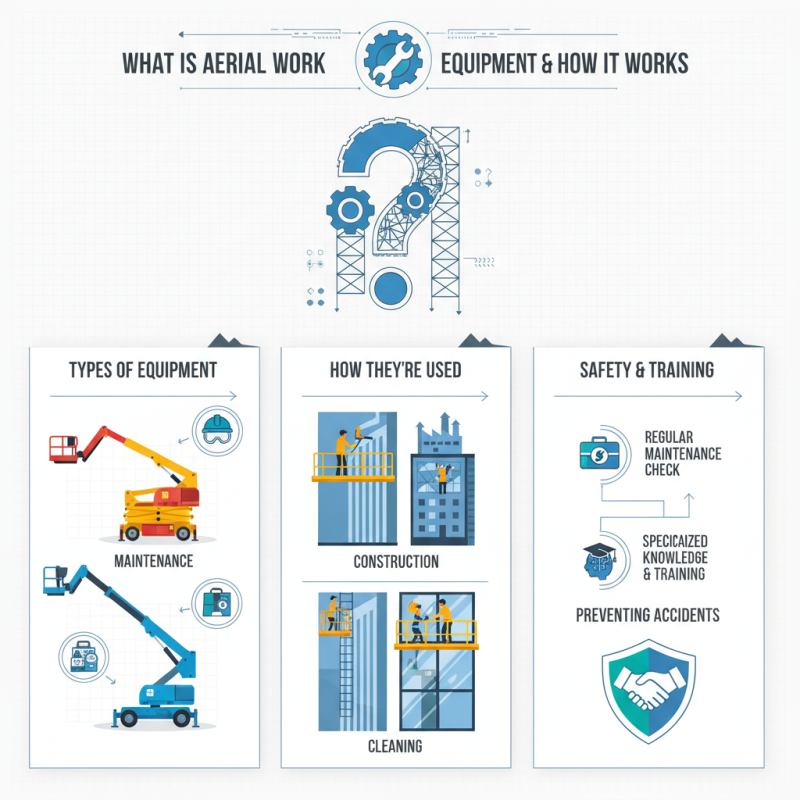
Aerial work equipment refers to various machines designed to access heights safely. This includes boom lifts, scissor lifts, and aerial platforms. Each type is critical for many industries, such as construction and maintenance. Their importance lies in enhancing safety and efficiency when working at elevations.
Using aerial work equipment significantly reduces the risk of accidents. Workers can operate at heights while securely positioned. This not only improves productivity but also safeguards personnel. Every year, numerous injuries occur due to falls. Choosing the right equipment can help mitigate these risks.
Tips: Always inspect equipment before use. Regular maintenance is key. Familiarize yourself with safety protocols. Training is crucial for all operators. Knowledge of the equipment's limitations is essential.
Even with proper planning, accidents can happen. It's vital to have contingency plans in place. Safety gear should never be an afterthought. Aerial work equipment plays a pivotal role, but a thorough understanding of its use is necessary for any operator.
| Equipment Type | Description | Common Uses | Working Height (ft) | Safeguards |
|---|---|---|---|---|
| Boom Lifts | Aerial device with a platform attached to a hydraulic arm. | Construction, maintenance, and tree trimming. | 30-80 ft | Safety harnesses, guardrails. |
| Scissor Lifts | Platform that rises vertically with a crisscross mechanism. | Indoor and outdoor tasks, electrical work. | 20-50 ft | Automatic brakes, leveling systems. |
| Telehandlers | Forklift with an extendable boom for lifting materials. | Material handling, construction sites. | 30-55 ft | Load stability systems, operator training. |
| Mast Lifts | Vertical lift with a compact design for tight spaces. | Painting, installation in tight or high areas. | 10-30 ft | Emergency stop, safety interlocks. |
| Aerial Platforms | General term for all types of elevated work platforms. | Various industries including maintenance and repairs. | Varies widely | Comprehensive training, inspections. |
: Aerial work equipment allows workers to access heights safely and efficiently in various industries.
Scissor lifts are popular for construction; they provide a stable platform for indoor tasks.
No, scissor lifts are compact and may not be suitable for extreme heights.
Inspect for hydraulic leaks and ensure emergency systems are functioning properly.
Regular maintenance can prevent over 50% of failures, according to experts.
Proper training enhances confidence and knowledge, reducing the risk of dangerous misuse.
Understanding weight limits is essential, as miscalculating can lead to dangerous tipping.
Strong communication among team members can reduce misunderstandings and lead to safer practices.
Frequent safety drills should be held to reinforce accident prevention practices.
Operators should be familiar with the equipment and always practice safety procedures.
Aerial work equipment refers to specialized machinery designed for working at height, enabling operators to perform tasks effectively and safely. Understanding "what is aerial work equipment and how does it work" involves looking at its various types, including scissor lifts, boom lifts, and cherry pickers, each tailored for specific applications across multiple industries such as construction, maintenance, and utilities. The equipment operates through hydraulic or mechanical systems that elevate platforms, ensuring stability and safety features to protect users.
The applications of aerial work equipment are extensive, allowing for tasks like building maintenance, electrical work, and even tree trimming. To ensure optimal performance and safety, it is crucial to adopt best practices regarding usage and maintenance, such as regular inspections, proper training for operators, and adherence to safety regulations. By understanding these elements, users can maximize the effectiveness of aerial work equipment and mitigate risks associated with elevated operations.

 Liftara Lift